
Reviewed · OLD SAN JUAN & THE OLD TOWN
Old San Juan Walking Day and Night Tours
History walks better than maps. This Old San Juan walking tour turns the city’s 500 years of stories into a practical, photo-friendly loop through the walled-city landmarks. I love the small-group size (max 10) and the built-in water breaks that keep the pace comfortable. One drawback to plan for: you’ll be on your feet much of the time on historic streets, so sturdy shoes are a must.
I also like how the experience spotlights real names and specific places. Guides such as Andreas, Roberto, and Nahomi are praised for storytelling that makes the history feel visual, not like a lecture. If you want a fast way to get your bearings in Old San Juan, this format fits well.
In This Review
- Key Things I’d Focus On Before You Go
- Old San Juan in a Tight 3-Hour Walk
- Where You Start and Finish: Plaza Colón to Paseo de la Princesa
- Photo-Friendly Pacing: How the Route Keeps Moving (and Stops)
- Plaza Colón: The Meeting Spot for Columbus-Era Details
- Castillo San Cristóbal and La Fortaleza Views: Military Power Without the Guesswork
- Plaza de la Barandilla: A Named-After-the-Handrail Detour
- Plaza de Armas: Where Civic Life and Military Drills Met
- Iglesia de San Jose: Spanish Gothic and a 1523 Church Still in Use
- Plaza del Quinto Centenario: 1992’s 500th Anniversary Mark
- Cuartel de Ballaja: Barracks That Housed More Than Soldiers
- La Rogativa: A Sculpted Memory of 450 Years and an Attack in 1797
- La Puerta de San Juan: The Last Standing City Door
- Catedral Basilica Menor de San Juan Bautista and Paseo de la Princesa
- Guides Make It Click: Andreas, Roberto, and Nahomi
- Price Check: What You’re Really Paying For
- Who This Tour Suits Best (and Who Might Rethink It)
- Should You Book This Old San Juan Walking Tour?
- FAQ
- How much does the Old San Juan walking tour cost?
- How long is the tour?
- What group size should I expect?
- Where do I meet the tour, and where does it end?
- What’s included in the tour?
- Are service animals allowed?
- Are admissions included for the stops?
- Is there time for photos and breaks during the walk?
- What is the cancellation policy?
Key Things I’d Focus On Before You Go
- Small group (max 10): easier to hear, ask questions, and keep a good pace through tight streets
- Photo stops plus water breaks: the route is designed to slow down at the right moments
- A “plazas and landmarks” approach: you see the city’s political, religious, and military sides
- Forts and checkpoints without feeling rushed: you get key views even when entry isn’t included
- Multiple guides mentioned by name: Andreas, Roberto, and Nahomi are specifically highlighted for their style
More cobblestone hours in Old San Juan
Old San Juan in a Tight 3-Hour Walk
This tour is about 3 hours total, and the walking route is built around short stops rather than a nonstop march. The core experience runs about two and a half hours, with that extra time coming from moving between sites in Old San Juan’s compact center.
For $85.99 per person, the value is really about time and attention. You’re paying for a guide who stitches together what you’re seeing—Plaza Colón, churches, fortifications, and the old entrances to the city—so you don’t have to figure it all out alone on the first day.
The group size matters here. With a maximum of 10 travelers, it’s easier to stay engaged when you’re close to other people and navigating small plazas and alleyways.
Where You Start and Finish: Plaza Colón to Paseo de la Princesa
You meet at Plaza Colón in Old San Juan. That’s the kind of meeting point that makes sense: you’re dropped right into the historic core before you even start walking.
The tour ends on Paseo de la Princesa. This is useful because it puts you near the “keep going” zone for Old San Juan—plus it’s just a small walk away from taxi access for getting back toward the cruise ports. If you’re timing this as your first sightseeing block, ending on a working promenade is a smart move.
The tour also includes a mobile ticket, so you’re not stuck printing something out. It’s one less thing to manage.
Photo-Friendly Pacing: How the Route Keeps Moving (and Stops)
What I like about this kind of tour design is the rhythm. You get photo opportunities along the way and water breaks, which matters in Puerto Rico even when the walk is short.
You’re not just collecting sights—you’re walking from one “anchor” point to another. The route keeps turning over new story material every few minutes, so you’re not stuck at one place listening for ages.
One practical point: because it’s a walking experience, you’ll want shoes you can trust on uneven old-street surfaces. Comfortable soles make the whole day feel smoother.
Plaza Colón: The Meeting Spot for Columbus-Era Details
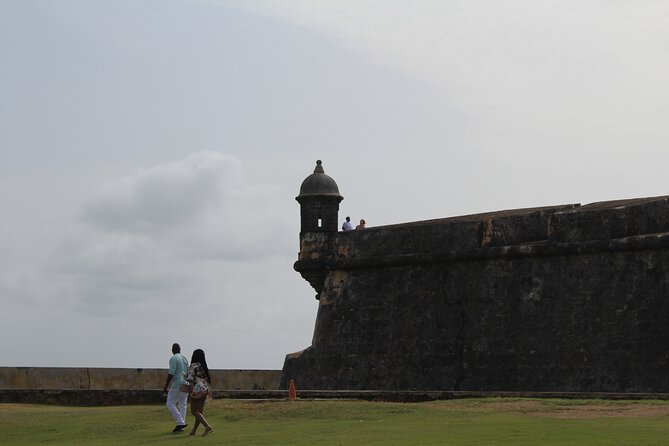
Your tour kicks off at Plaza Colón, a plaza tied to Christopher Columbus and the Genoese figure associated with his voyages. The main structure includes a relief showing the first and second voyages, and there’s a statue of Columbus right there.
This is a strong first stop because it sets the lens for everything after. You’re not just seeing pretty buildings—you’re seeing the city’s early European power story right away, and then the walk expands outward from that starting point.
More San Juan after the sun drops
- San Juan Sunset Harbor Boat Ride★ 4.5 · 1,320 reviews
- Historical San Juan Bay Sunset Sailing Tour★ 4.5 · 710 reviews
- San Juan Catamaran Sunset Sail with Drinks Included★ 5.0 · 622 reviews
- Savor the Sunset: Old San Juan Walking Food Tour★ 5.0 · 559 reviews
Castillo San Cristóbal and La Fortaleza Views: Military Power Without the Guesswork
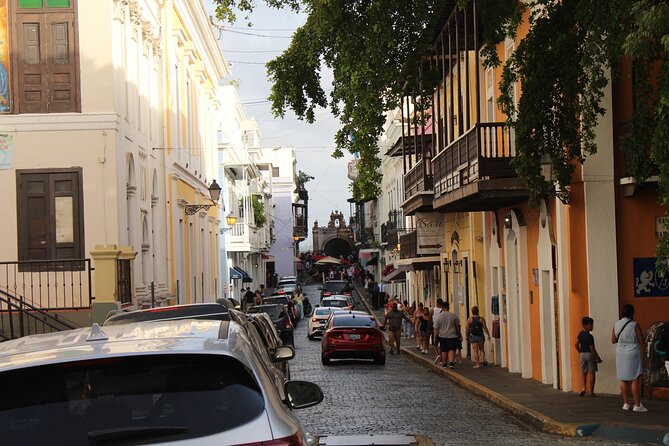
Old San Juan’s identity isn’t only churches and colorful facades. It’s also protection—who controlled the approaches, who defended the islet, and how fortifications shaped where people could live and move.
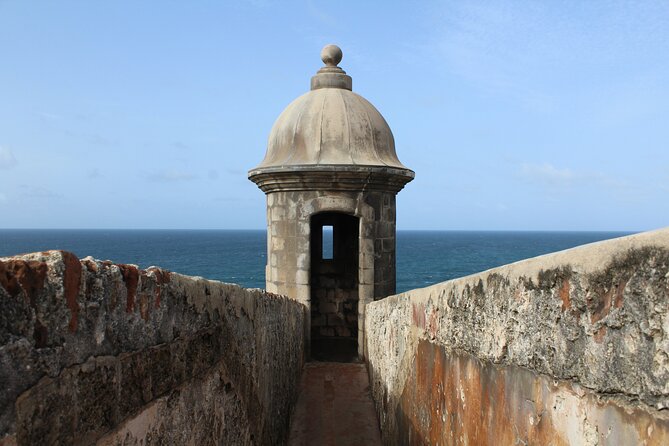
You’ll get time focused on El Castillo San Cristóbal, described as a major Spanish Crown fortification in the Americas, originally built for defense of the islet by land. Even if you only see parts of it from the route, it’s the kind of landmark that explains the city’s layout.
Later, you also stop near La Fortaleza – Palacio de Santa Catalina. This site is described as the first fortification on the islet, originally meant to protect the initial settlement. You do not go inside the palace, but the stop is still valuable because it adds another layer: defense evolving into governance.
Plaza de la Barandilla: A Named-After-the-Handrail Detour
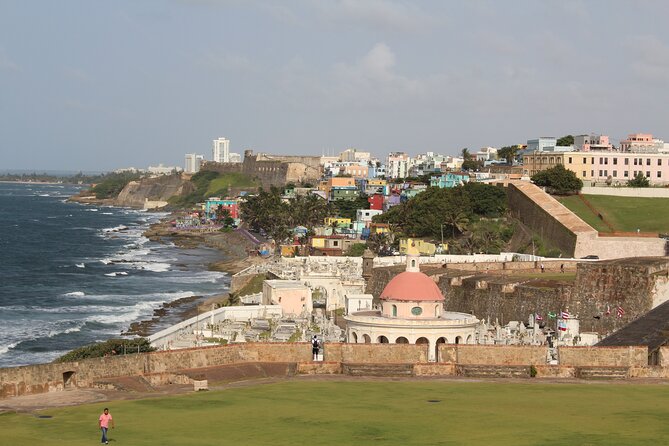
Not every stop is a statue or a church. Plaza de la Barandilla is notable because it’s the one plaza in Old San Juan that is not named after a historical or religious figure.
Its identity comes from the characteristic handrail that connects Calle San Francisco with Calle Luna. This is the kind of detail that makes your walk feel more like exploring than sightseeing-by-checklist. It’s also a good “breather” stop—short and specific, with a clear reason it’s there.
Plaza de Armas: Where Civic Life and Military Drills Met
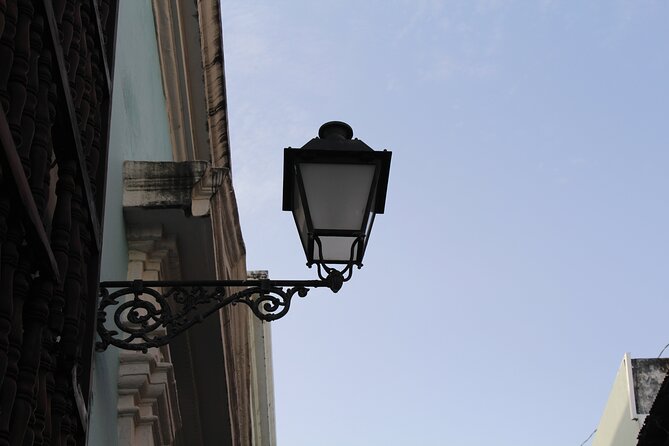
At Plaza de Armas, you get the sense of a city built for control and order. This is described as the first plaza in Old San Juan where military drills were conducted since early settlements in the 1500s.
You’ll also see key civic anchors tied to Spanish rule: the Town Hall and the old Royal Audience. This stop helps you understand how the city ran—who had authority, where official decisions happened, and how the military presence was woven into daily planning.
If you like history that shows the practical mechanics of power, this plaza is one of the more satisfying stops.
Iglesia de San Jose: Spanish Gothic and a 1523 Church Still in Use
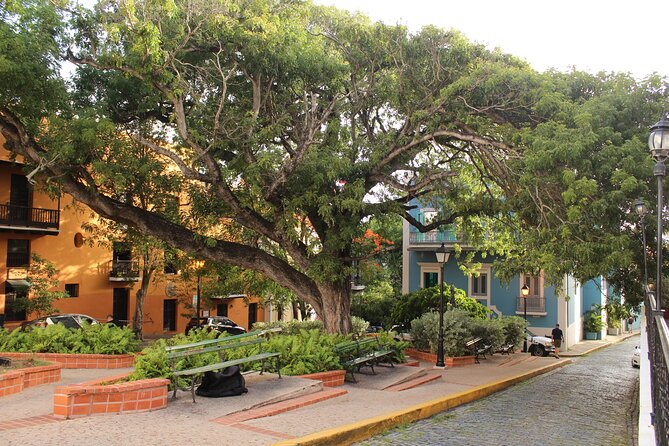
Then the walk shifts from civic and military to spiritual and social life at Iglesia de San Jose. Built in 1523, it’s described as the second oldest church in the new world that’s still in use.
The architecture is highlighted as Spanish Gothic, and it’s right next to a statue of Juan Ponce de León, the conquistador and first governor mentioned in the tour notes.
This stop is especially helpful if you’ve ever wondered why some Old San Juan churches feel like they were built into the city’s identity rather than added on later. Standing here gives you that answer quickly.
Plaza del Quinto Centenario: 1992’s 500th Anniversary Mark
The tour also includes Plaza del Quinto Centenario, built in 1992 to celebrate the 500th anniversary of the founding of Old San Juan.
It’s a shorter, lighter stop (about 15 minutes), but it adds context you might miss if you only focus on the earliest centuries. Modern commemorations matter because they show what the city chose to remember—and how it wanted that message to look in 1992.
You’ll see symbols along with an emblematic totem, giving you something visual to photograph and point out later.
Cuartel de Ballaja: Barracks That Housed More Than Soldiers
Next comes Cuartel de Ballaja, described as barracks originally constructed in 1864 by the Spanish Crown.
The notes say it housed over a thousand officers, soldiers, and even some of their families. That single detail changes how you imagine a barracks. It wasn’t only a military building—it was part of the city’s living infrastructure during a different chapter of rule.
If you’re a history-on-the-ground person, this stop gives you that “wait, people actually lived here” perspective that makes everything else more real.
La Rogativa: A Sculpted Memory of 450 Years and an Attack in 1797
La Rogativa is a sculptural stop that commemorates anniversaries and conflict. The work is credited to Lindsay Dean, a sculptor from New Zealand who lived on the island.
The monument is described as commemorating the 450th anniversary of Old San Juan’s founding and remembering the British attack of 1797.
I like this stop because it reminds you that Old San Juan history isn’t just Spanish-era facts. It includes later shocks and the changing forces that reached the island.
La Puerta de San Juan: The Last Standing City Door
Then you reach La Puerta de San Juan, described as the last door left standing to this day.
The tour notes explain that it granted entrance to weary sailors from the old port, leading them directly toward the cathedral of San Juan. That’s a small detail with big meaning: it turns a doorway into a story about arrival, routines, and how people moved from port to worship.
Even if you’ve seen plenty of old doors in Europe and Latin America, this one has a clear Puerto Rico-specific role in the city’s day-to-day history.
Catedral Basilica Menor de San Juan Bautista and Paseo de la Princesa
The tour finishes with two major “city center” experiences: the cathedral area and the promenade.
At Catedral Basilica Menor de San Juan Bautista, the church built in 1529 is highlighted for frescoes, stained glass, and religious relics, plus it’s described as a final resting place for some prominent figures in the city.
One practical thing: the cathedral is noted as open only on certain occasions, days, and times. So don’t assume interior access every time slot. Even if you only get to see what’s available from outside or around the area, the stop still ties the Puerta story to the spiritual center of Old San Juan.
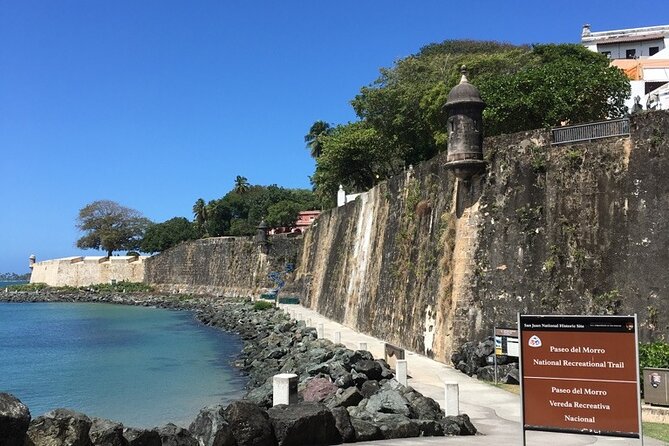
Finally, you end at Paseo de la Princesa, a European-style promenade built in the 19th century and named after La Princesa de Asturias. It’s described as preserved and still in use today, which makes a pleasant finish: you’re not trapped on a tour loop—you’re placed right on a working public space.
Guides Make It Click: Andreas, Roberto, and Nahomi
The strongest praise centers on the guides and the way they tell the story. You’ll feel it most in how questions flow. With a group of up to 10, you can actually ask something and get a real answer instead of waiting your turn.
Names that come up clearly include Andreas, Roberto, and Nahomi. Andreas is described as a standout storyteller who brings history to life in your imagination. Roberto is praised for passionate Puerto Rico context and for answering questions directly. Nahomi is highlighted as enthusiastic and warm, and this matters because it keeps the tour from feeling like just facts on a street.
If you like history, this style is a big deal. It turns “I saw a plaza and a church” into “I understand why this place mattered.”
Price Check: What You’re Really Paying For
At $85.99, you’re not only paying for walking and landmarks. You’re paying for three things that are hard to replicate alone:
- A time-saved route through the core sites without needing to stitch it together yourself
- Context that connects forts, government space, and religious sites into one narrative
- A guide who sets the pace with water breaks and photo moments so you don’t burn out
The value also improves if you’re visiting Old San Juan for the first time or only have a short window. This tour is designed to help you decide what to revisit later. You come away with a mental map of what’s where and why it’s significant.
Who This Tour Suits Best (and Who Might Rethink It)
This experience is ideal for you if:
- You want a first-day Old San Juan orientation that focuses on the “why” behind landmarks
- You prefer a small group over big-bus style tours
- You like history told through real places: plazas, churches, forts, and city entrances
You might rethink it if:
- You’re looking for a long, free-form wander where you call all the shots every minute
- You don’t want to walk for most of a 3-hour window, even with breaks
If you’re a “sit, read, and take photos” traveler, this still works—just choose comfortable shoes and don’t plan another major hike immediately afterward.
Should You Book This Old San Juan Walking Tour?
If you want an efficient, well-paced way to understand the walled city, I’d book it. The route hits major anchors—Plaza Colón, Plaza de Armas, Iglesia de San Jose, La Puerta de San Juan, and the cathedral area—and ties them together through 500 years of Puerto Rican history and culture as the guide walks you through it.
Book this tour especially if you like history that feels grounded in what you can actually see. And if you’re the type who benefits from good questions, the small group size gives you a real shot at getting answers while you’re standing in front of the place.
If you want to make it even better for yourself, do this before you commit to deeper plans. This tour gives you enough context to choose what to explore longer afterward—without guessing.
FAQ
How much does the Old San Juan walking tour cost?
It’s $85.99 per person.
How long is the tour?
The tour runs about 3 hours total, including walking time between attractions.
What group size should I expect?
The tour has a maximum of 10 travelers.
Where do I meet the tour, and where does it end?
You start at Plaza Colón, San Juan, 00916, Puerto Rico, and it ends at Paseo de la Princesa, San Juan, 00901, Puerto Rico.
What’s included in the tour?
You get bottled water included, and you’ll use a mobile ticket.
Are service animals allowed?
Yes, service animals are allowed, and the tour notes that most travelers can participate.
Are admissions included for the stops?
Many of the stops are listed with free admission tickets. However, La Fortaleza – Palacio de Santa Catalina is not included (you do not go into the palace). The Cathedral Basilica Menor de San Juan Bautista has access noted as open only on certain occasions, days, and times.
Is there time for photos and breaks during the walk?
Yes. The tour is designed with photo opportunities and water breaks along the way.
What is the cancellation policy?
You can cancel for free up to 24 hours in advance for a full refund.
More Tours in San Juan
More of Old San Juan
More Tour Reviews in San Juan
Freshly reviewed San Juan tours

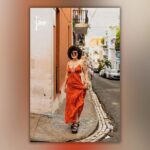
Old San Juan & the Old Town, compared.
 ★ 4.5Night Kayak – Condado City Lights TourFrom $754,807 reviews
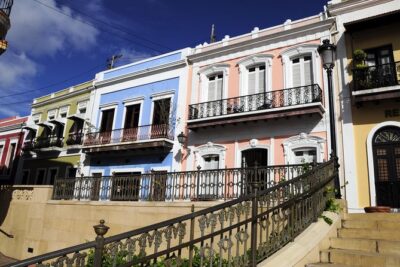 ★ 5.0Old San Juan Walking TourFrom $392,211 reviews
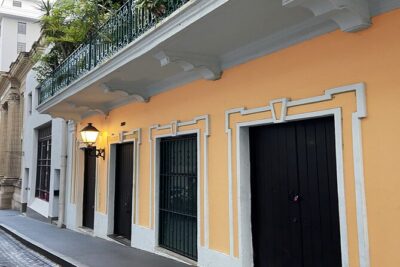 ★ 5.0Old San Juan City Walking TourFrom $391,718 reviews
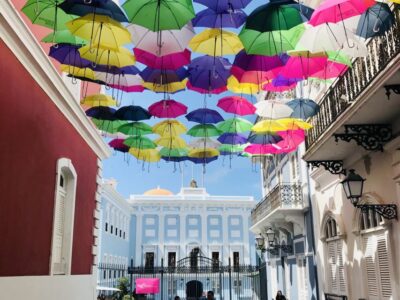 ★ 4.7Old Town Sunset Walking TourFrom $39636 reviews
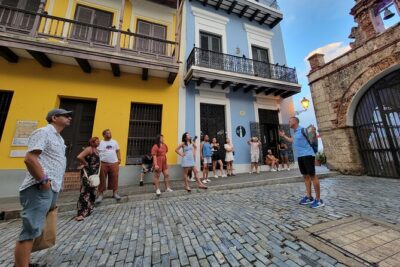 ★ 5.0Historic Old San Juan Sunset Walking TourFrom $39634 reviews
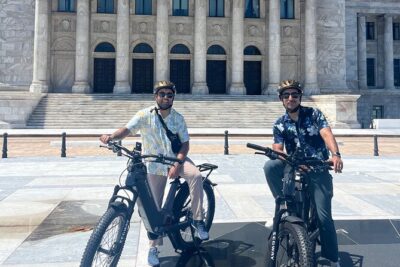 ★ 4.5Old San Juan: Segway PT and Segway Xafari Ebike ToursFrom $108634 reviews
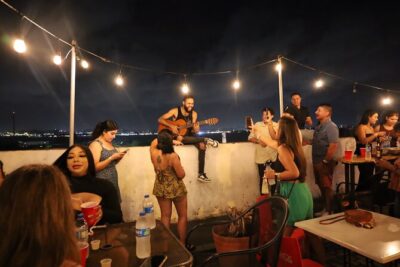 ★ 4.5Old San Juan Bar Crawl: Experience Local HotspotsFrom $65574 reviews
 ★ 5.0Savor the Sunset: Old San Juan Walking Food TourFrom $179559 reviews
Browse the lists this tour appears in