
Reviewed · OLD SAN JUAN & THE OLD TOWN
Old San Juan Tour in Spanish
Spanish only. Same streets, new stories.
This is a focused Old San Juan tour en Español led by Daniel Rivera Viruet, running about 2 hours with a small group, and I like how it keeps the feel of the city through Spanish narration. I also like the respectful pacing around churches, where the guide only enters when it is empty or nearly empty. One thing to consider: you do not go inside the big castle stops or the Ponce de León house, so if you want interiors and ticketed exhibits during the walking portion, you will need a separate plan.
You start at Plaza Colón (meeting point listed at 407 C. de San Francisco), walk the cobblestones, and hit the sights that explain why San Juan became a fortified Spanish stronghold. With a max group size of 20, you get room to ask questions, and the tour uses a mobile ticket for easy entry.
In This Review
- Key things I’d plan around before you go
- Why an all-Spanish Old San Juan tour at 12:30 matters
- Getting your bearings: Plaza Colón and the walled-city idea
- Churches you may enter: San Francisco de Asís and Iglesia de San Jose
- Forts you don’t enter: Castillo de San Cristóbal and Castillo San Felipe del Morro
- Calle San Sebastián: cobblestones, color, and January festival energy
- Photo and symbolism: La Puerta de la Bandera and Puerto Rico’s flag story
- Walking with the bay in mind: Cuartel de Ballaja and La Rogativa
- Plaza del Quinto Centenario and the Telluric Totem
- The gates, the cemetery, and Ponce de León’s footprint
- The main street walk toward La Fortaleza and the end at Santo Cristo de la Salud
- Price and value: $30 for a Spanish guide plus free learning time
- Small group energy with Daniel Rivera Viruet (Dani)
- Who should book this Old San Juan tour in Spanish
- Should you book this tour?
- FAQ
- Is this Old San Juan tour offered in English or Spanish?
- Where does the tour start?
- How long is the tour?
- Is the group small?
- Will we enter the castles during the walking tour?
- Can we enter churches and how does that work?
- Is there a bathroom stop?
- What’s the cancellation policy?
Key things I’d plan around before you go
- Spanish-only experience at 12:30 pm, so double-check you booked the right departure.
- Small group (max 20), which makes the walking pace feel manageable.
- Church etiquette built in: entrances happen only if it is empty or few people are present.
- No castle interiors during the tour, but you get the best viewpoints and context.
- History through details, from the flag to the 500 Years plaza and public art.
More cobblestone hours in Old San Juan
Why an all-Spanish Old San Juan tour at 12:30 matters
San Juan can be visited at a lot of speeds, but language changes the pace. This is the option you pick when you want the stories told in Spanish from the start, not summarized into English midway. The schedule also helps you plan: the Spanish tour shown here runs at 12:30 pm, while English tours are available at a different time (you are asked to message in advance to check availability).
That matters for two reasons. First, Spanish-only guides tend to stick to the local rhythm of place, names, and context. Second, it turns the tour into more than sightseeing—you start following the narrative like a local would, even if you only know a little Spanish.
If you only speak English, this is not the right booking unless you confirm an English slot exists for your date. The tour is clearly positioned as a Spanish experience, so treat that as the product.
Getting your bearings: Plaza Colón and the walled-city idea
The tour kicks off at 407 C. de San Francisco, San Juan, 00901, Puerto Rico, which is the meeting point by Plaza Colón. The start is a quick introduction, but it also frames the whole walk: you learn why Spain built a walled city in the 1500s.
That detail is more than trivia. Once you understand the goal—protection, control, defense—the rest of the stops make more sense. The fortifications, the gates, and even the choice of street-level landmarks stop feeling random and start feeling like the city was designed as a system.
From the first minutes, you are set up to notice how Old San Juan balances beauty with purpose: colorful architecture alongside military strategy.
Churches you may enter: San Francisco de Asís and Iglesia de San Jose
Two church stops anchor the religious side of the story: Parroquia San Francisco de Asís and Iglesia de San Jose.
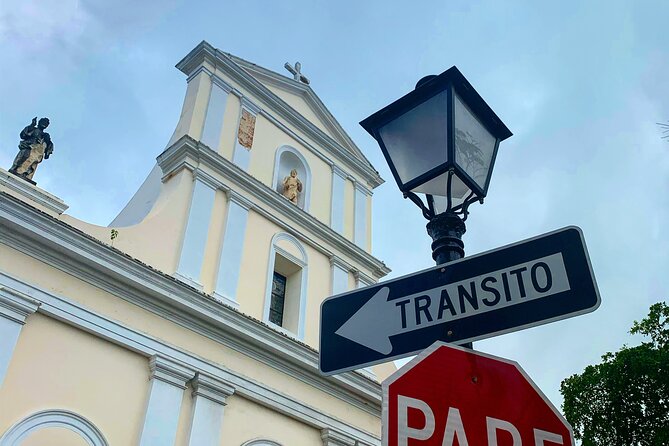
At San Francisco de Asís, the church is described with its founding in 1756. The guide shares history and interesting details, but there is an important behavior rule: you enter only if it is empty or has very few people. You also do not interrupt anyone who is praying. That is a small thing, but it changes the experience. You are not rushing through sacred space. You are fitting your visit into what is already happening.
Iglesia de San Jose goes further back, with 1532 listed as the second-oldest church in Puerto Rico. Same approach: learn the history, and only enter when it is quiet enough.
Practical takeaway: these are “permission-based” entries. If the church is crowded at that moment, you might not go inside—but you will still get the story from the outside and the route keeps you moving.
Forts you don’t enter: Castillo de San Cristóbal and Castillo San Felipe del Morro
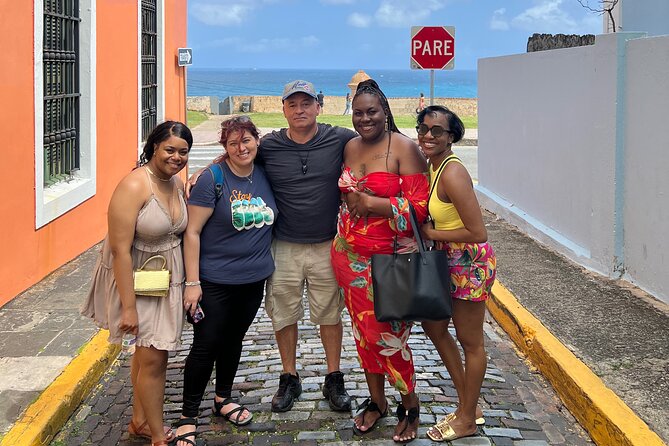
The tour includes two major defensive landmarks, but in an intentional way: you do not enter the castles during the walking portion.
First up is Castillo De San Cristobal, described as the largest castle built in America to defend the city. You learn from its history for about 10 minutes, then you move on. After the tour, you can visit independently since it has an entrance fee.
Later, you come to Castillo San Felipe del Morro, built in 1539 to defend the entrance to the bay. Again, you learn the context and get the view angle, but you do not go inside. You can visit after finishing the tour with its own entrance fee.
Why I like this format: it keeps the group walk timed and fluid. You still get the “why” behind the forts, without spending the walking tour time stuck in ticket lines or longer indoor stops. The tradeoff is obvious: you will not get castle interior exhibits during the tour window.
If you want the best of both, do the walking story now, then decide later if the paid castle visits are worth your extra time.
A few more ways to fill a day in San Juan:
- Top Rated El Yunque Rainforest & Waterslide – SmallGroup Tour★ 5.0 · 12,789 reviews
- Night Kayak – Condado City Lights Tour★ 4.5 · 4,807 reviews
- Authentic Flavors of San Juan Food Tour★ 5.0 · 4,741 reviews
- Small-Group El Yunque Rainforest Vivid Day Tour with Transport★ 5.0 · 2,747 reviews
Calle San Sebastián: cobblestones, color, and January festival energy
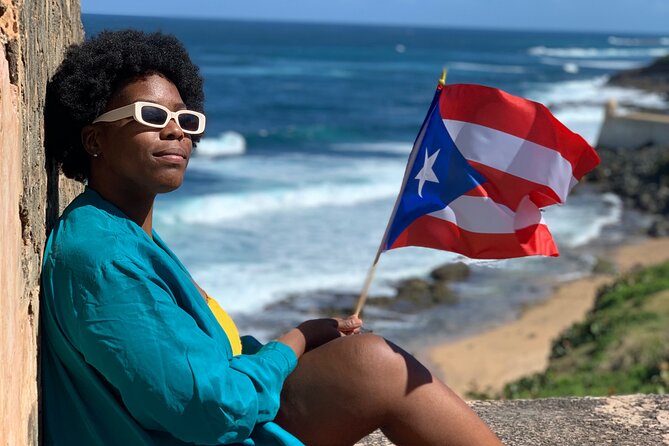
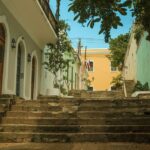
One of the most fun segments is the stretch on Calle San Sebastian. You are guided through the cobblestone streets and colorful buildings for about 10 minutes, and you also connect the street to a major cultural event: this is where Puerto Rico’s largest festival happens in January.
Even if you are there in the middle of the year, this stop gives you a key to reading the street. You are not only looking at pretty facades. You are learning why the street matters to local life—what kind of gatherings shaped its identity.
If you enjoy street-level atmosphere (texture, details, photo angles), this is a good stop to slow down for.
Photo and symbolism: La Puerta de la Bandera and Puerto Rico’s flag story
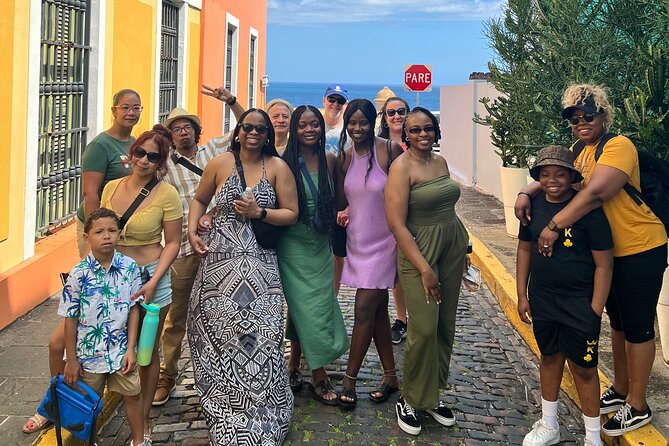
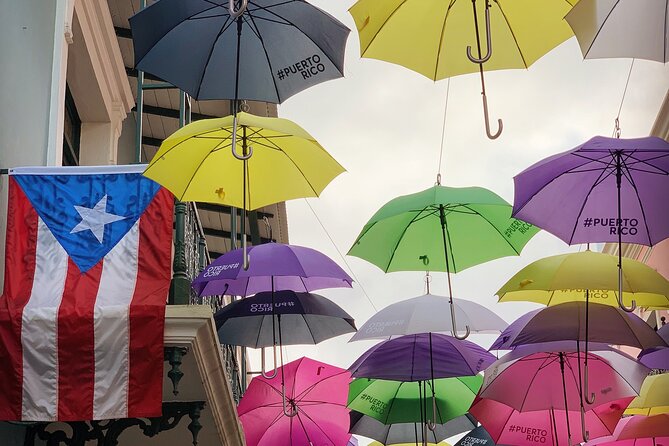
La Puerta de la Bandera is both a lesson and a quick photo opportunity. You learn about the flag of Puerto Rico and how it has changed over time, then you can take pictures at the spot.
This is one of those “small duration, big meaning” stops. A flag can be a poster image. Here it becomes part of a physical doorway in a walled city, which helps you understand why identity and defense were tied together during Spanish rule and later eras.
Walking with the bay in mind: Cuartel de Ballaja and La Rogativa

This section shifts from architecture to movement and viewpoint.
At Cuartel de Ballaja, you learn about the place where Spanish soldiers lived. The stop is roughly 10 minutes, and it is also noted as a potential bathroom stop if available. That is useful information for your personal pacing since the tour includes multiple short segments.
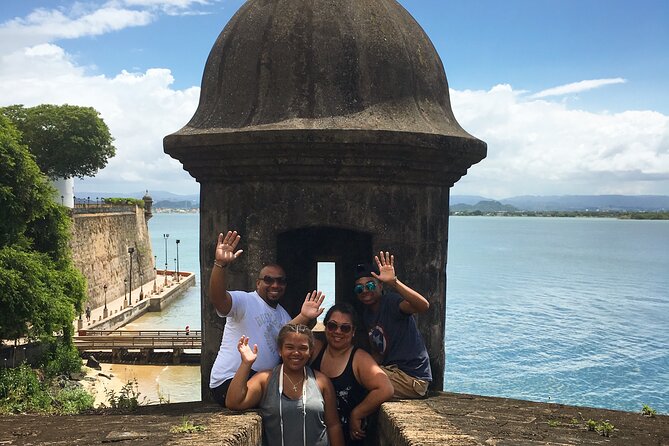
Then comes La Rogativa, where you walk with a view of the San Juan Bay. The viewpoint is positioned for one of the tour’s visual payoffs: from here you can see part of Juan Ponce de Leon’s house. You also learn about the Rogation tied to this location.
I like this part because it turns history into sightlines. You stop being a spectator. You become a moving reader of the coastline.
Plaza del Quinto Centenario and the Telluric Totem
Next is Plaza del Quinto Centenario, built in 1992 to celebrate 500 years of the discovery of America. The guide shares the plaza’s history and what details it hides, and you also learn where the Telluric Totem is located.
The totem is attributed to artist Jaime Suarez. This is a nice break from forts-and-churches mode. It reminds you the city’s story did not end in the 1500s. It kept getting interpreted, memorialized, and reimagined in later periods.
The gates, the cemetery, and Ponce de León’s footprint
A few stops cluster around “edge-of-old-San-Juan” feeling—where history is close to the waterline and you can sense the city’s defensive layout.
There is a cemetery stop described as an old cemetery located on the edge of the beach and near Castillo del Morro, where you learn about its history. Even without a long visit, that kind of location helps you understand how the city’s life and death were connected to the geography.
You also pass by the door of San Juan Bautista, identified as one of the main gates of the walled city. This is a short stop, but gates are where the city’s purpose becomes physical. Doors and entries are not just decoration; they are control points.
Then you reach House of Juan Ponce de León (1521). The guide teaches you about the history, but you do not enter the house. You can visit later, since it has an entrance fee.
Finally, there is a stop for the oldest church in Puerto Rico (1521). Like the other church entries, you only enter if it is empty or has few people, and you do not interrupt people who are praying. If it is busy, you will still get the story component, but the inside look may not happen.
Practical note: because entry rules apply to multiple religious stops, your “inside time” can vary. The tradeoff is that the guide keeps the visit respectful, which is part of why this tour feels well-run.
The main street walk toward La Fortaleza and the end at Santo Cristo de la Salud
After the gate-and-church segments, you get back into the heart of Old San Juan’s everyday flow with Calle De La Fortaleza. The guide explains its history and points out that it is the main street where you will find shops, restaurants, crafts, and galleries.
This is one of the best parts to plan your next move. The tour ends near Capilla del Santo Cristo de la Salud, where the guide shares the capilla’s history and the tour finishes. After that, you can continue walking along Fortaleza Street for lunch and shopping.
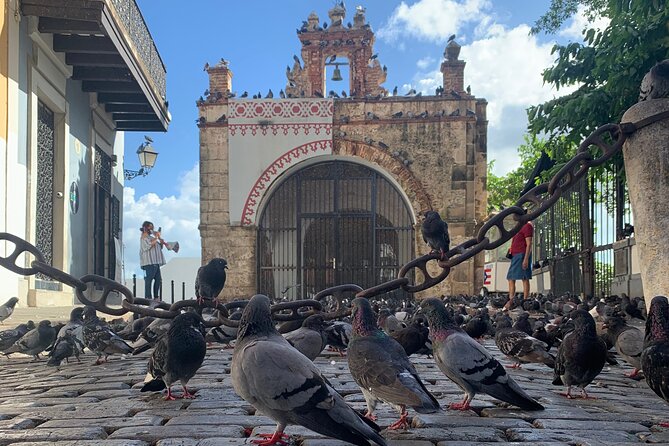
The big value here is timing: you get your guided orientation first, then you are free to choose what to do with the information while you are still in the right neighborhood.
Price and value: $30 for a Spanish guide plus free learning time
At $30 per person for about 2 hours, this is priced like a true “value tour.” The big reason is that the tour’s goal is not to sell expensive add-ons. Most of the stops are structured around explanation and quick segments, with “free” admission tickets for the listed sites during the tour.
That said, you should understand what costs are likely outside the walk:
- The castles (San Cristóbal and El Morro) have entrance fees if you want inside access later.
- Juan Ponce de León’s house has an entrance fee if you want to go in later.
So the value math looks like this: you pay for a guide and story at a low entry price, then decide later whether you want to spend extra on interior visits. If you like guided context and want flexibility, this structure works well.
It also helps that the group max is 20. Small groups usually mean less waiting and more chances to ask questions, and that lines up with the consistently high ratings you can expect from a guide who manages the group attention.
Small group energy with Daniel Rivera Viruet (Dani)
The tour is led by Daniel Rivera Viruet, often called Dani. The standout theme around the guide is how attentive he is—checking that the group is okay, pausing for questions, and keeping things moving without rushing.
That matters in a walking tour because the “quality” is not only what you learn, but how the guide handles transitions: cobblestones, church timing, and the way outdoor views work best when you pause at the right moment.
If you want a tour that feels like a conversation in Spanish rather than a scripted checklist, this is the kind of guide you are looking for.
Who should book this Old San Juan tour in Spanish
This tour is a great match if you:
- Want an Old San Juan guide who speaks Spanish throughout
- Prefer a walking orientation that helps you understand fortifications, gates, churches, and major landmarks
- Like learning details that connect architecture to Spanish defense and later stories
- Are comfortable with moderate walking on cobblestones
You might skip it (or pair it with other plans) if you:
- Need guaranteed indoor access to the castles or Ponce de León house during the tour window
- Are only comfortable with English and can’t confirm an English departure for your date
- Have very limited tolerance for walking segments (the tour does require moderate physical fitness)
Should you book this tour?
Yes, if you want Old San Juan in Spanish and you value orientation over box-checking. At $30 with a small group cap, it is a strong way to learn why this city was walled, how the big forts guarded the bay, and how gates and churches fit into the story of centuries in Puerto Rico.
Before you book, confirm you chose the 12:30 pm Spanish tour, since English is handled differently. Also accept the tour’s approach: it focuses on learning at key stops, with castle and house interiors saved for after with separate entrance fees.
FAQ
Is this Old San Juan tour offered in English or Spanish?
This tour is offered in Spanish at 12:30 pm. English tours start at 9:30 am, and you are instructed to send a message before booking to check availability.
Where does the tour start?
The meeting point is listed at 407 C. de San Francisco, San Juan, 00901, Puerto Rico, and the tour ends back at the meeting point.
How long is the tour?
The duration is about 2 hours.
Is the group small?
Yes. The tour lists a maximum of 20 travelers.
Will we enter the castles during the walking tour?
No. The tour states that it does not enter Castillo De San Cristobal or Castillo San Felipe del Morro. You can visit them after the tour with their entrance fees.
Can we enter churches and how does that work?
You may enter churches only if they are empty or have few people. The tour also notes that they cannot interrupt people who are praying.
Is there a bathroom stop?
A bathroom stop may be available at Cuartel de Ballaja.
What’s the cancellation policy?
Cancellation is free up to 24 hours before the experience start time for a full refund. It requires good weather, and if it is canceled due to poor weather, you are offered another date or a full refund.
More Tours in San Juan
More of Old San Juan
More Tour Reviews in San Juan
Freshly reviewed San Juan tours

Old San Juan & the Old Town, compared.
 ★ 4.5Night Kayak – Condado City Lights TourFrom $754,807 reviews
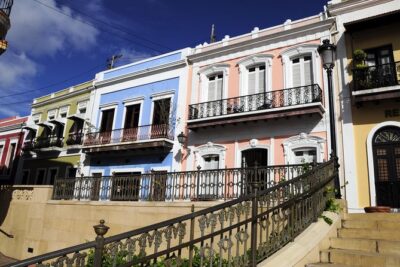 ★ 5.0Old San Juan Walking TourFrom $392,211 reviews
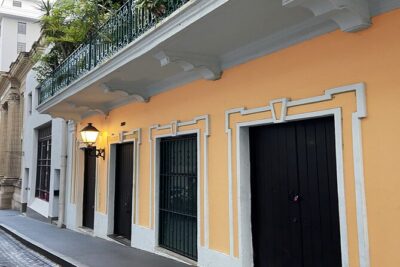 ★ 5.0Old San Juan City Walking TourFrom $391,718 reviews
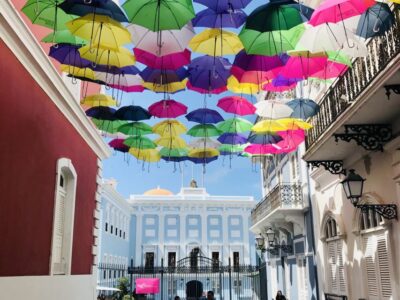 ★ 4.7Old Town Sunset Walking TourFrom $39636 reviews
 ★ 4.5Old San Juan: Segway PT and Segway Xafari Ebike ToursFrom $108634 reviews
 ★ 5.0Historic Old San Juan Sunset Walking TourFrom $39634 reviews
 ★ 4.5Old San Juan Bar Crawl: Experience Local HotspotsFrom $65574 reviews
 ★ 5.0Savor the Sunset: Old San Juan Walking Food TourFrom $179559 reviews
Browse the lists this tour appears in